

Resources
-
This recording of the BlueAdapt Final Conference captures discussions on climate-driven health risks in coastal areas, integrating environmental science, public health, climate modelling, and socio-economic analysis through One Health and systems-based approaches.
Across three dedicated sessions, researchers and EU policymakers explore: 1) the spread of viral pathogens, sewage overflows, antimicrobial resistance (AMR) and early-warning tools, 2) systems-based governance and local adaptation strategies to protect vulnerable communities, and 3) building resilient water infrastructure, using risk data to guide public behavior, and translating project recommendations directly into EU frameworks like the Bathing Water and Water Framework Directives.
-
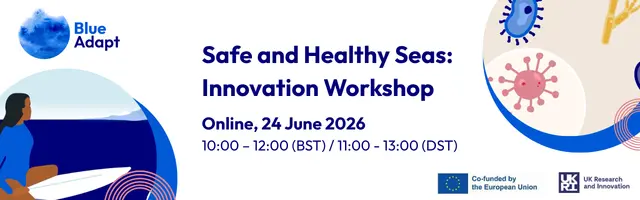
This recording captures the BlueAdapt Innovation Slam, showing how it aimed to inspire collaborative solutions to protect coastal health from pollution and climate risks. It features talks on viral warning systems by Jessica Kevill (Bangor University), Living Labs by Aline Chiabai (BC3), and the economics of bathing water data by Mikołaj Czajkowski (University of Warsaw). The session also showcases user-led tools, including Surfers Against Sewage’s alert app presented by Sam Nichols, and participatory frameworks by Jokin Etxebarria (Naider), Toñi Caro, and Francisco Albala (Eoh-for-Good).
-
This 7-week free e-learning BlueAdapt course explains how warming seas can affect coastal environments and worsen water quality, exposing coastal communities to rising threats (e.g., waterborne infections and antibiotic-resistant bacteria). The course includes videos, quizzes and resources which cover topics such as climate-driven coastal pathogen risks, the One Health framework, health and economic impact assessment tools, BlueAdapt case study insights and adaptation strategies and its available in 5 languages including English and Spanish.
-
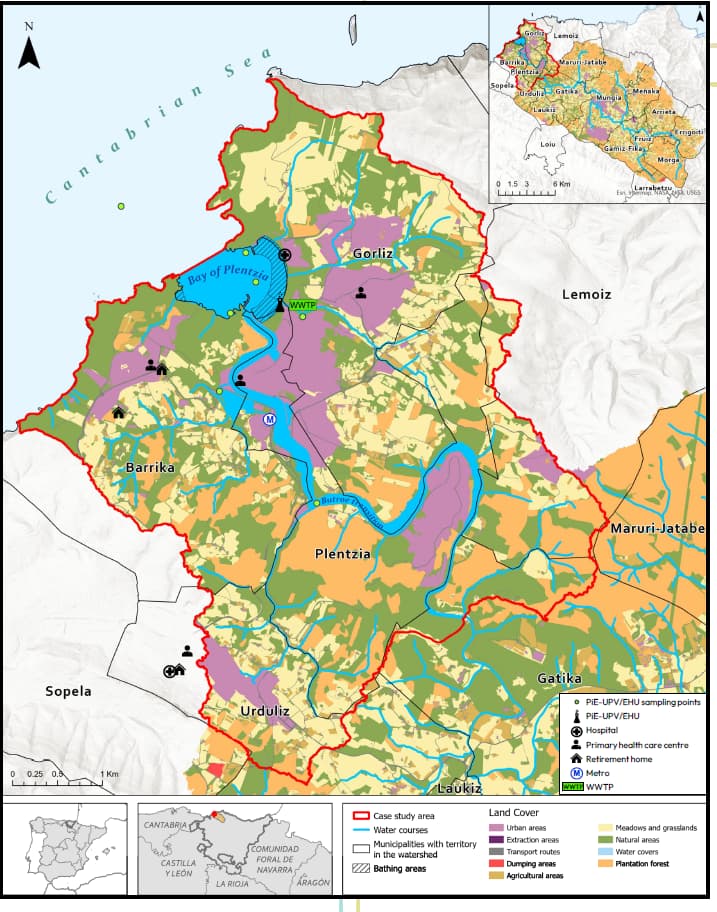
This poster summarises the analysis of the social-ecological status of the Bay of Plentzia and Butroe estuary, including the biophysical context, upstream activities, pollution sources, climatic pressures, the health of the community and their social context.
-
This report explores the interconnections between the health of humans, animals, and ecosystems in the Bay of Plentzia. By centering the first-hand experiences of local stakeholders through cognitive mapping methodologies, this report identifies the core drivers and intervention points for a healthy system.
-
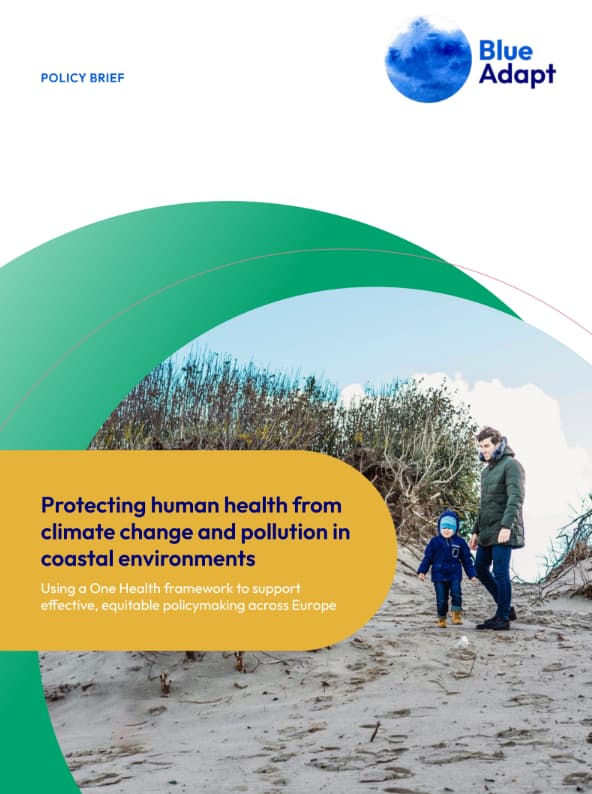
The policy brief summarises how the BlueAdapt Extended One Health Framework contributes to more equitable and contextual policy recommendations that protect human health from climate change and pollution in coastal environments.
-
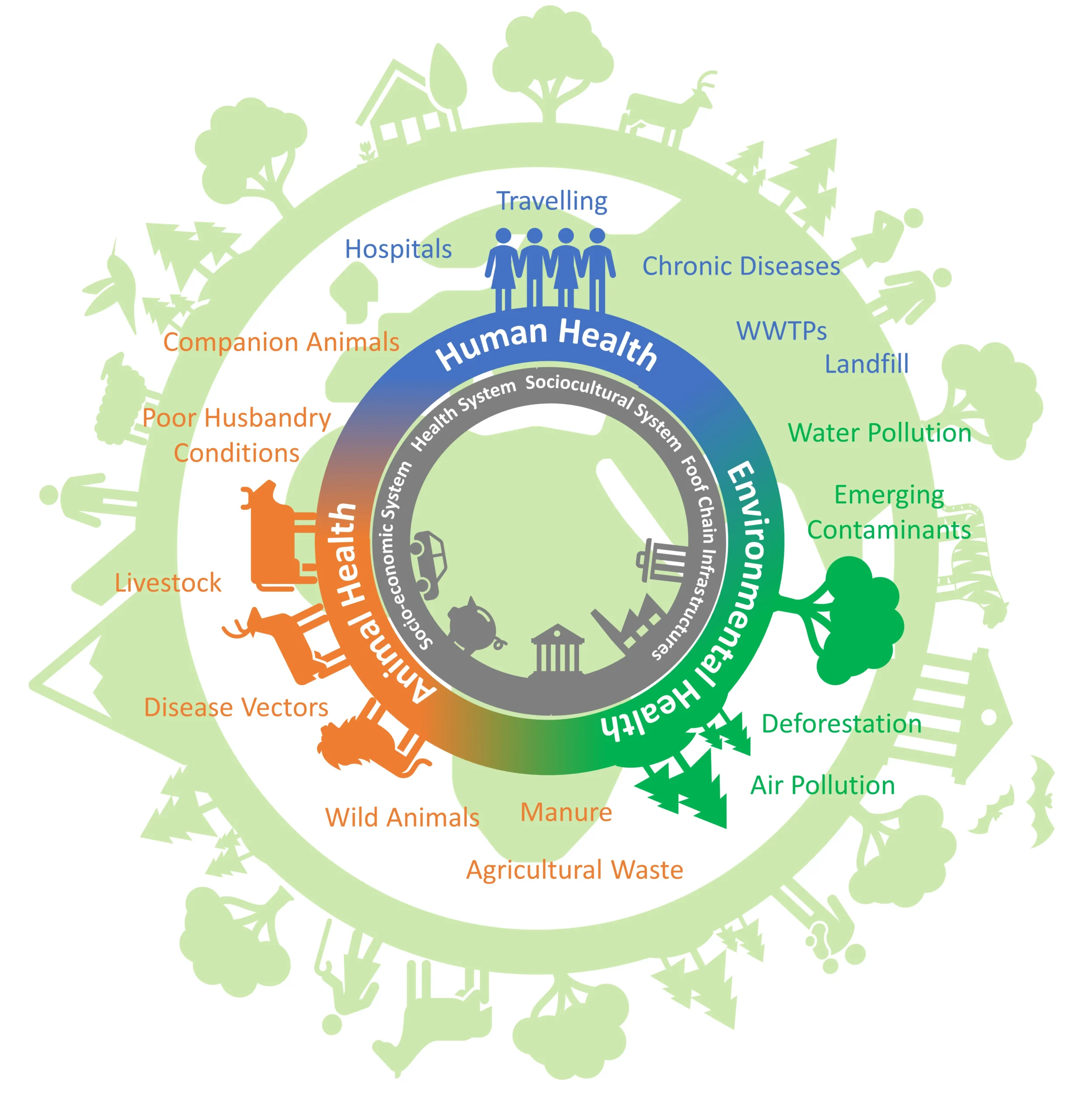
This report connects environmental and health challenges, including climate change, pollution, infectious diseases, factors that weaken a population's health, and social inequalities. Our goal is to broaden how we understand health by integrating scientific knowledge from different fields and highlighting the importance of social sciences.
-
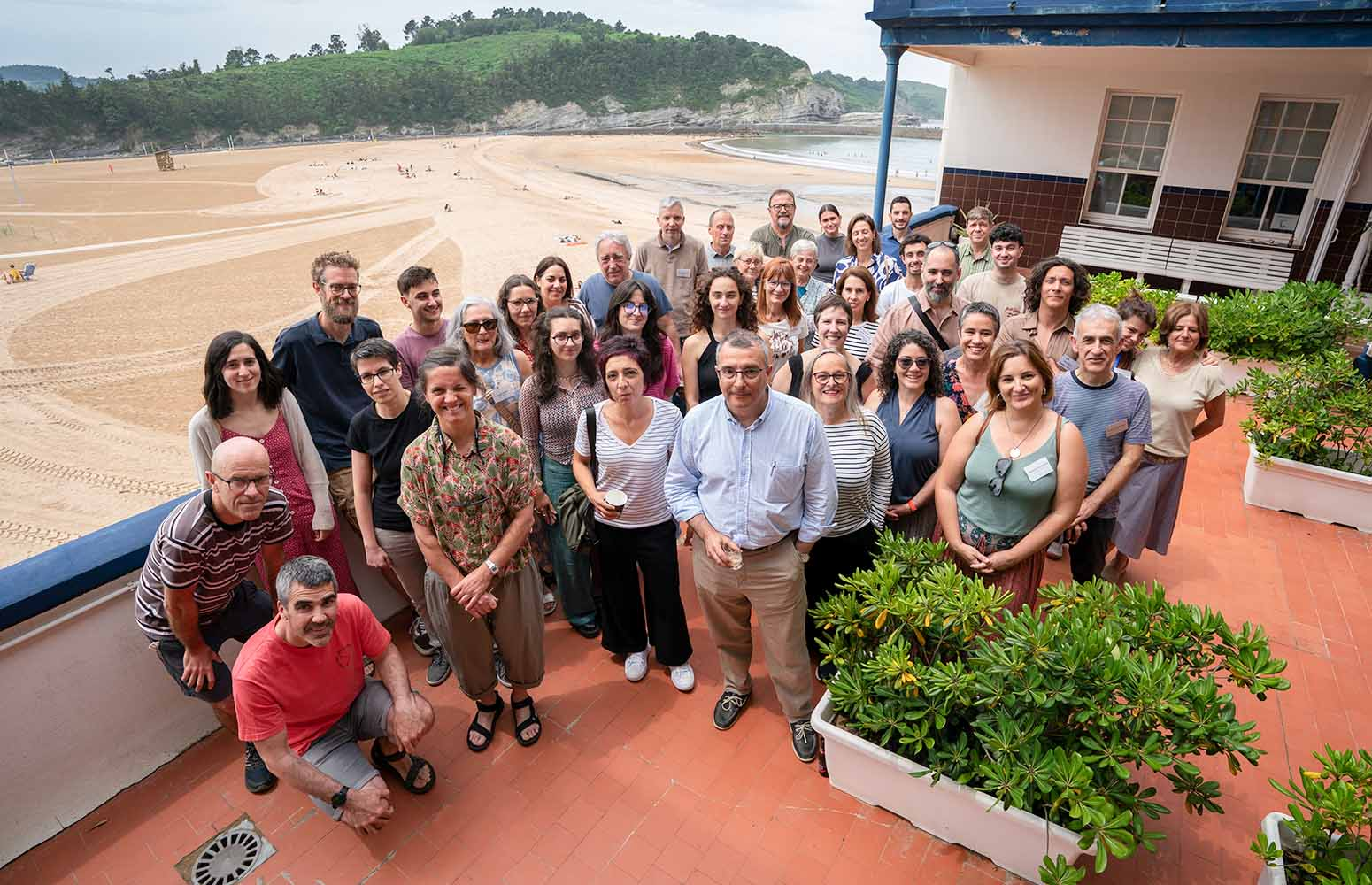
This report shows the results of a workshop which took place in summer 2025 with local stakeholders from public institutions, NGOs, community groups and researchers that came together to identify shared priorities, propose joint activities and develop an action plan for the Helios-OHLL. Together, participants identified 48 activities for the Helios-OHLL.
-
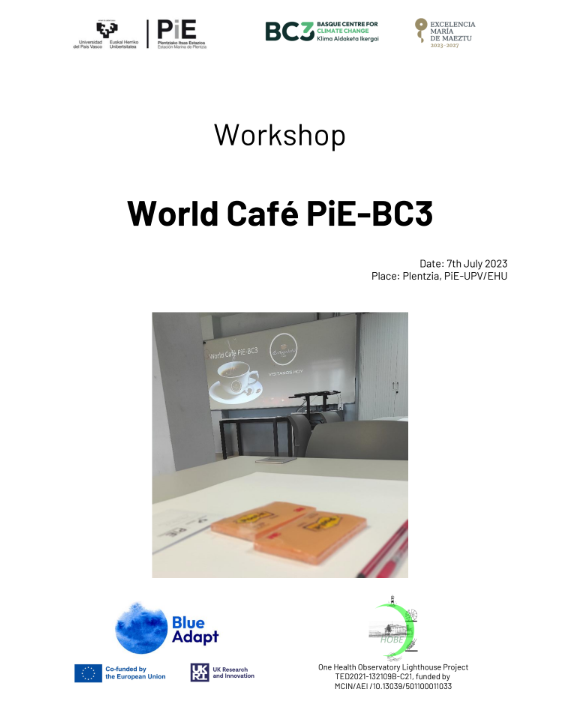
This report discusses a World Café workshop held in summer of 2023 that brought together researchers from the Plentzia Marine Station (PiE-EHU) and the Basque Centre for Climate Change (BC3) to share expertise, exchange perspectives and explore ways to communicate across disciplinary boundaries and build a common understanding within the One Health approach.
-
This recording captures the BlueAdapt Innovation Slam, showing how it aimed to inspire collaborative solutions to protect coastal health from pollution and climate risks. It features talks on viral warning systems by Jessica Kevill (Bangor University), Living Labs by Aline Chiabai (BC3), and the economics of bathing water data by Mikołaj Czajkowski (University of Warsaw). The session also showcases user-led tools, including Surfers Against Sewage’s alert app presented by Sam Nichols, and participatory frameworks by Jokin Etxebarria (Naider), Toñi Caro, and Francisco Albala (Eoh-for-Good).
-
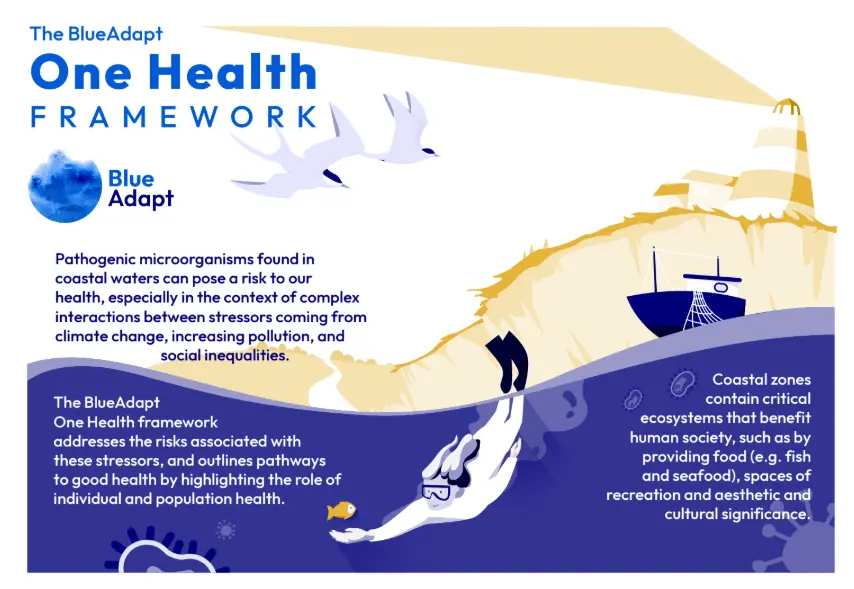
The infographic aims to simplify the complex interactions between environmental, social, and biological processes involved in increasing the risk of infectious diseases. It helps identify opportunities for action beyond end-of-pipe solutions (such as antibiotic consumption), encouraging prevention, and tackling root causes (such as addressing social inequalities, mitigating pollution and climate change).
-
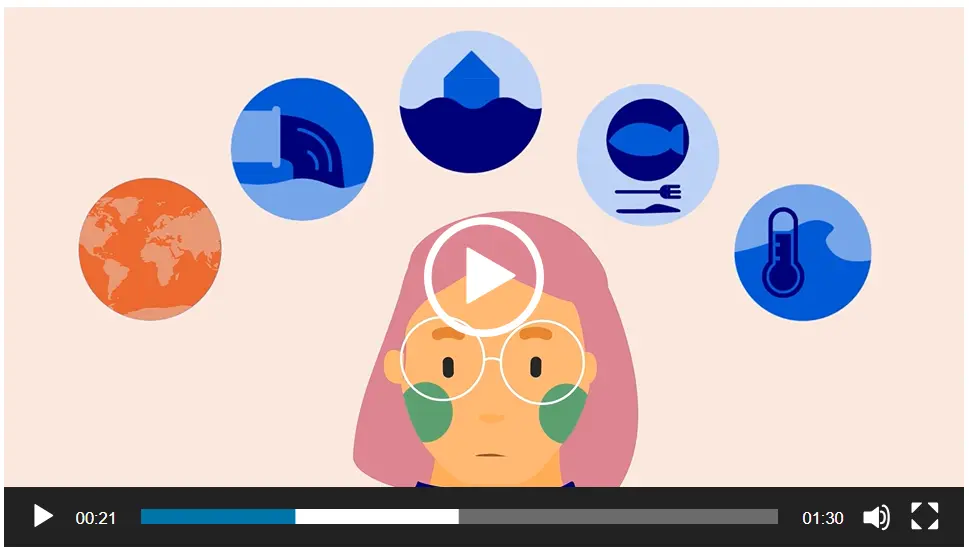
This video helps to understand how pollution, climate change, microbes in coastal waters, people’s health, and their living conditions influence the risk of getting an infection in coastal zones. Switching the focus from exposure to pathogens toward understanding the vulnerabilities of people living in coastal areas (e.g., poor health or low socioeconomic status).

Knowledge
-
This recording of the BlueAdapt Final Conference captures discussions on climate-driven health risks in coastal areas, integrating environmental science, public health, climate modelling, and socio-economic analysis through One Health and systems-based approaches.
Across three dedicated sessions, researchers and EU policymakers explore: 1) the spread of viral pathogens, sewage overflows, antimicrobial resistance (AMR) and early-warning tools, 2) systems-based governance and local adaptation strategies to protect vulnerable communities, and 3) building resilient water infrastructure, using risk data to guide public behavior, and translating project recommendations directly into EU frameworks like the Bathing Water and Water Framework Directives.
-
This recording captures the BlueAdapt Innovation Slam, showing how it aimed to inspire collaborative solutions to protect coastal health from pollution and climate risks. It features talks on viral warning systems by Jessica Kevill (Bangor University), Living Labs by Aline Chiabai (BC3), and the economics of bathing water data by Mikołaj Czajkowski (University of Warsaw). The session also showcases user-led tools, including Surfers Against Sewage’s alert app presented by Sam Nichols, and participatory frameworks by Jokin Etxebarria (Naider), Toñi Caro, and Francisco Albala (Eoh-for-Good).
-
This 7-week free e-learning BlueAdapt course explains how warming seas can affect coastal environments and worsen water quality, exposing coastal communities to rising threats (e.g., waterborne infections and antibiotic-resistant bacteria). The course includes videos, quizzes and resources which cover topics such as climate-driven coastal pathogen risks, the One Health framework, health and economic impact assessment tools, BlueAdapt case study insights and adaptation strategies and its available in 5 languages including English and Spanish.
-
This poster summarises the analysis of the social-ecological status of the Bay of Plentzia and Butroe estuary, including the biophysical context, upstream activities, pollution sources, climatic pressures, the health of the community and their social context.
-
This report explores the interconnections between the health of humans, animals, and ecosystems in the Bay of Plentzia. By centering the first-hand experiences of local stakeholders through cognitive mapping methodologies, this report identifies the core drivers and intervention points for a healthy system.
-
The policy brief summarises how the BlueAdapt Extended One Health Framework contributes to more equitable and contextual policy recommendations that protect human health from climate change and pollution in coastal environments.
-
This report connects environmental and health challenges, including climate change, pollution, infectious diseases, factors that weaken a population's health, and social inequalities. Our goal is to broaden how we understand health by integrating scientific knowledge from different fields and highlighting the importance of social sciences.
Participation
-
This report shows the results of a workshop which took place in summer 2025 with local stakeholders from public institutions, NGOs, community groups and researchers that came together to identify shared priorities, propose joint activities and develop an action plan for the Helios-OHLL. Together, participants identified 48 activities for the Helios-OHLL.
-
This report discusses a World Café workshop held in summer of 2023 that brought together researchers from the Plentzia Marine Station (PiE-EHU) and the Basque Centre for Climate Change (BC3) to share expertise, exchange perspectives and explore ways to communicate across disciplinary boundaries and build a common understanding within the One Health approach.
Action
-
This recording captures the BlueAdapt Innovation Slam, showing how it aimed to inspire collaborative solutions to protect coastal health from pollution and climate risks. It features talks on viral warning systems by Jessica Kevill (Bangor University), Living Labs by Aline Chiabai (BC3), and the economics of bathing water data by Mikołaj Czajkowski (University of Warsaw). The session also showcases user-led tools, including Surfers Against Sewage’s alert app presented by Sam Nichols, and participatory frameworks by Jokin Etxebarria (Naider), Toñi Caro, and Francisco Albala (Eoh-for-Good).
Education
-
This 7-week free e-learning BlueAdapt course explains how warming seas can affect coastal environments and worsen water quality, exposing coastal communities to rising threats (e.g., waterborne infections and antibiotic-resistant bacteria). The course includes videos, quizzes and resources which cover topics such as climate-driven coastal pathogen risks, the One Health framework, health and economic impact assessment tools, BlueAdapt case study insights and adaptation strategies and its available in 5 languages including English and Spanish.
Awareness
-
The infographic aims to simplify the complex interactions between environmental, social, and biological processes involved in increasing the risk of infectious diseases. It helps identify opportunities for action beyond end-of-pipe solutions (such as antibiotic consumption), encouraging prevention, and tackling root causes (such as addressing social inequalities, mitigating pollution and climate change).
-
This video helps to understand how pollution, climate change, microbes in coastal waters, people’s health, and their living conditions influence the risk of getting an infection in coastal zones. Switching the focus from exposure to pathogens toward understanding the vulnerabilities of people living in coastal areas (e.g., poor health or low socioeconomic status).